PROCESS WORK
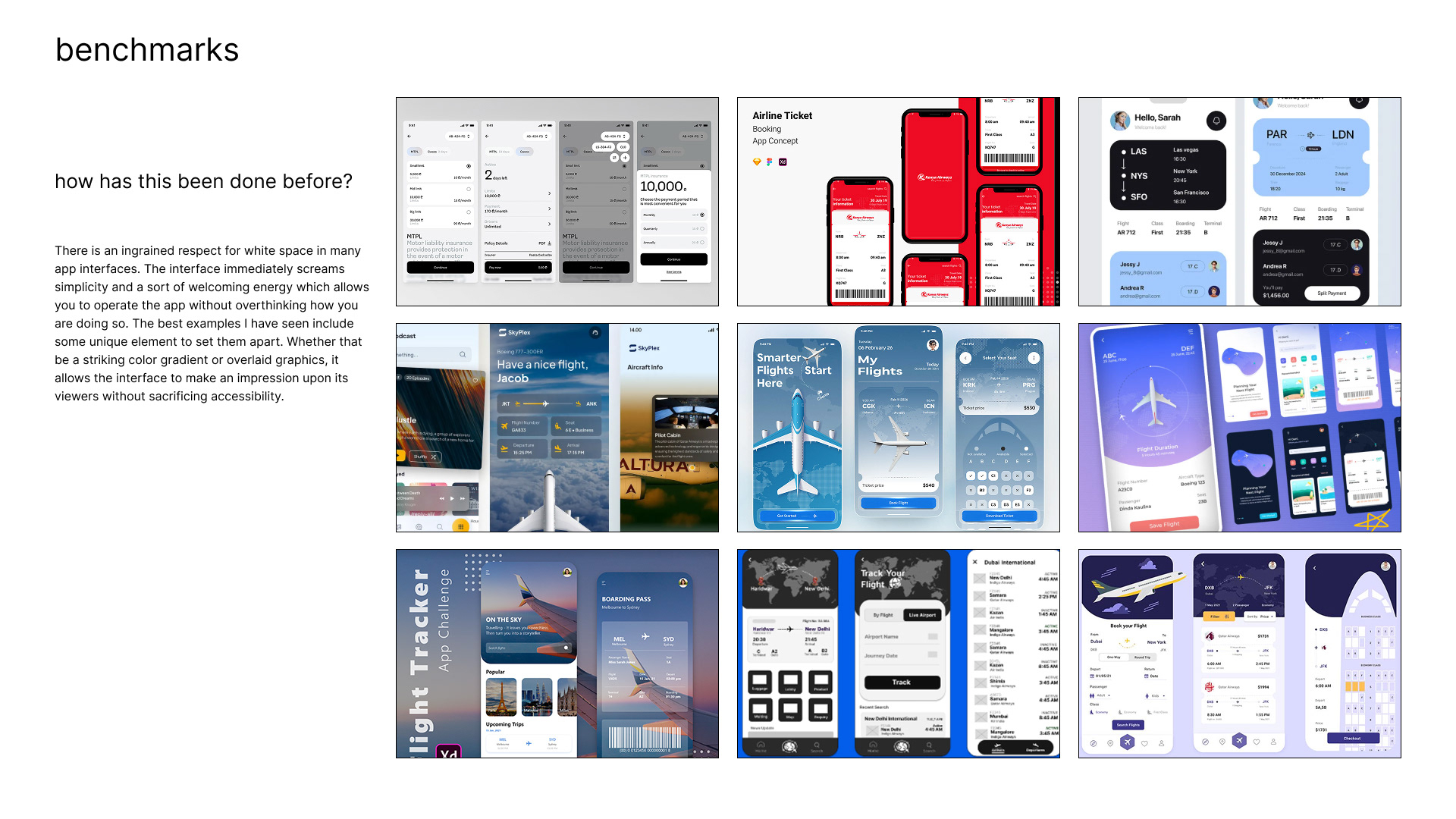
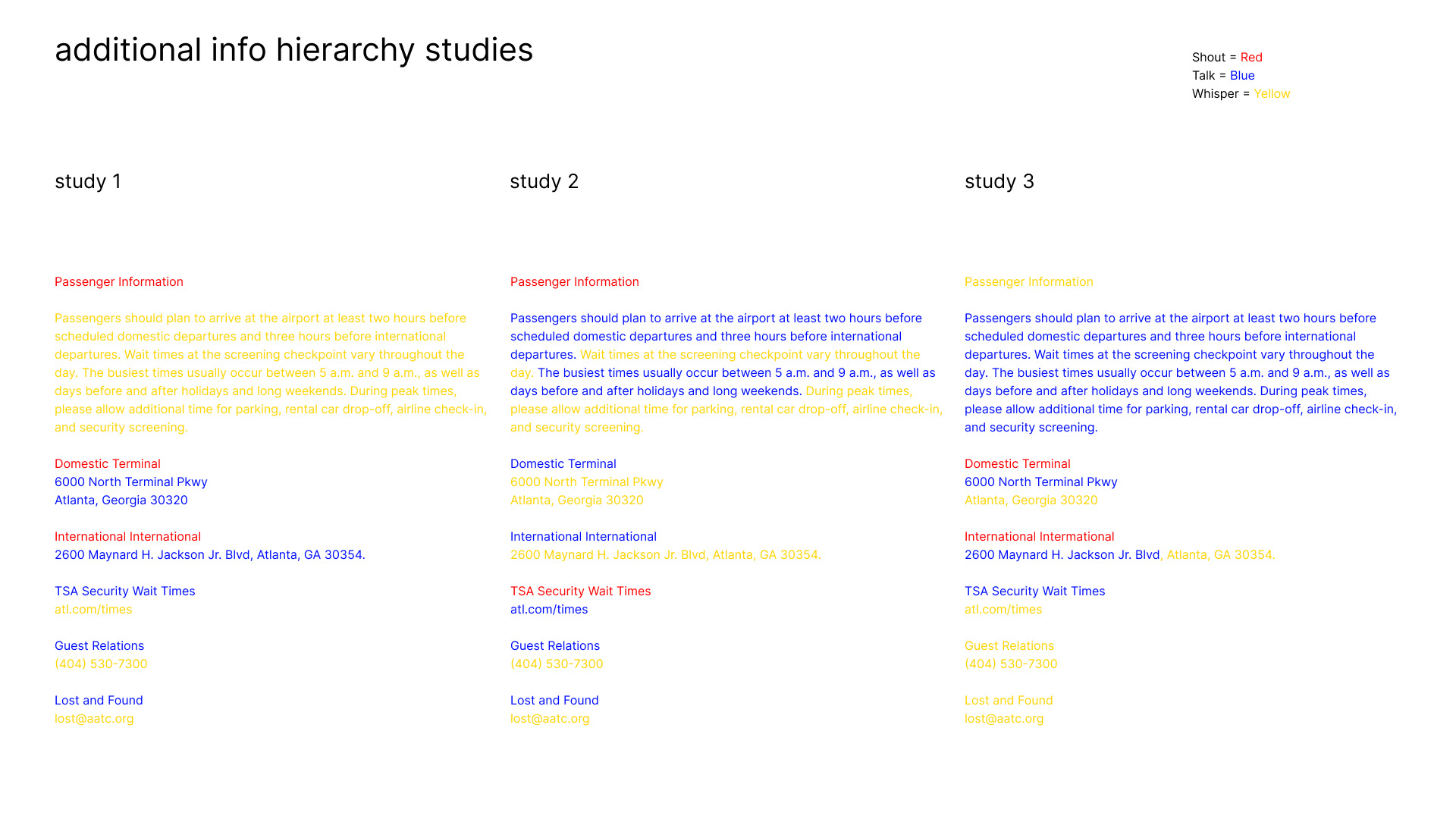
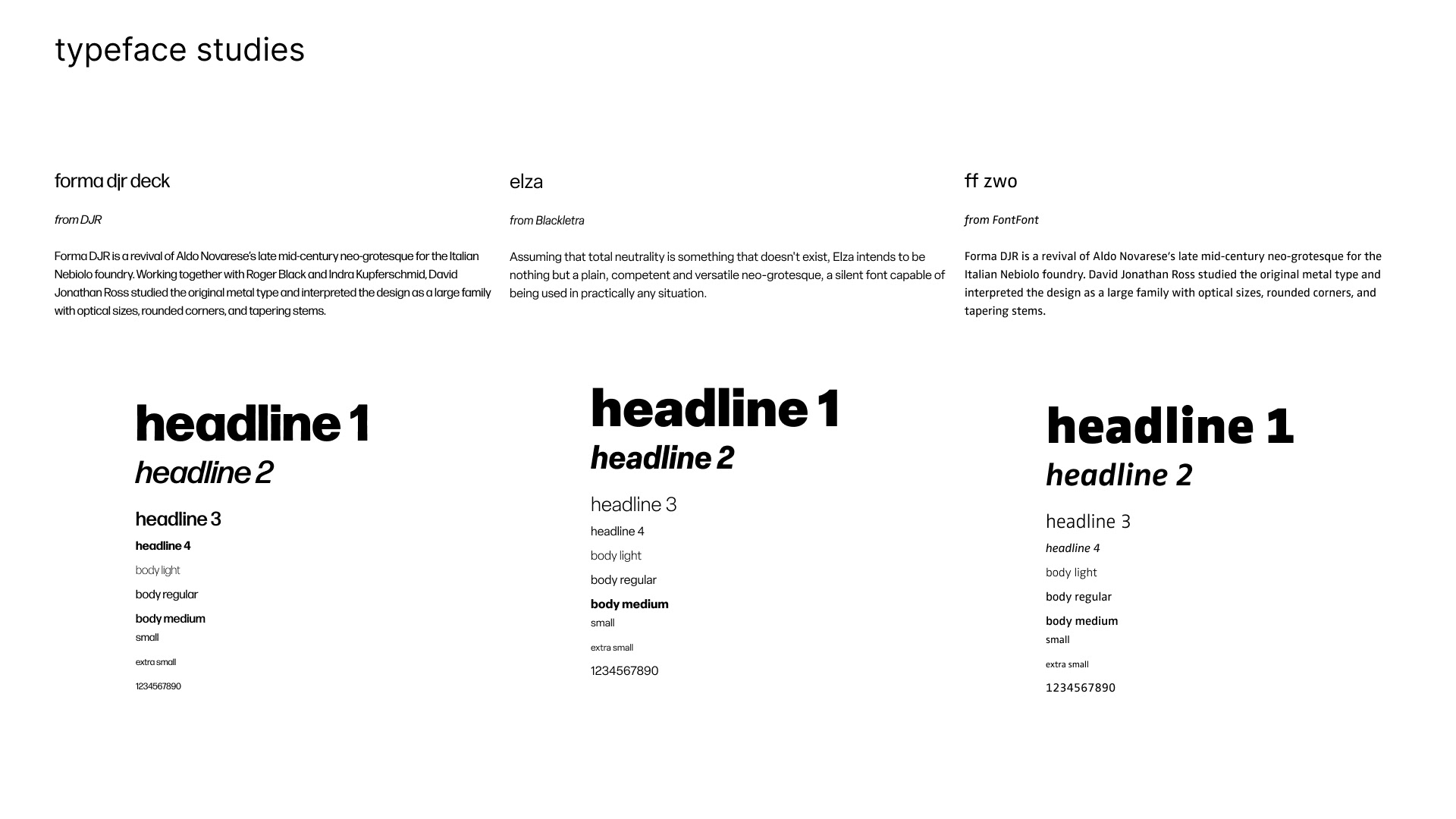
The beginning phases of the Hartsfield-Jackson Project primarily consisted of research on a variety of visual components that would assist in materializing the completed interface. The most critical of these components were benchmarks and typefaces, which assisted in more meticulously visualizing the ideal results.
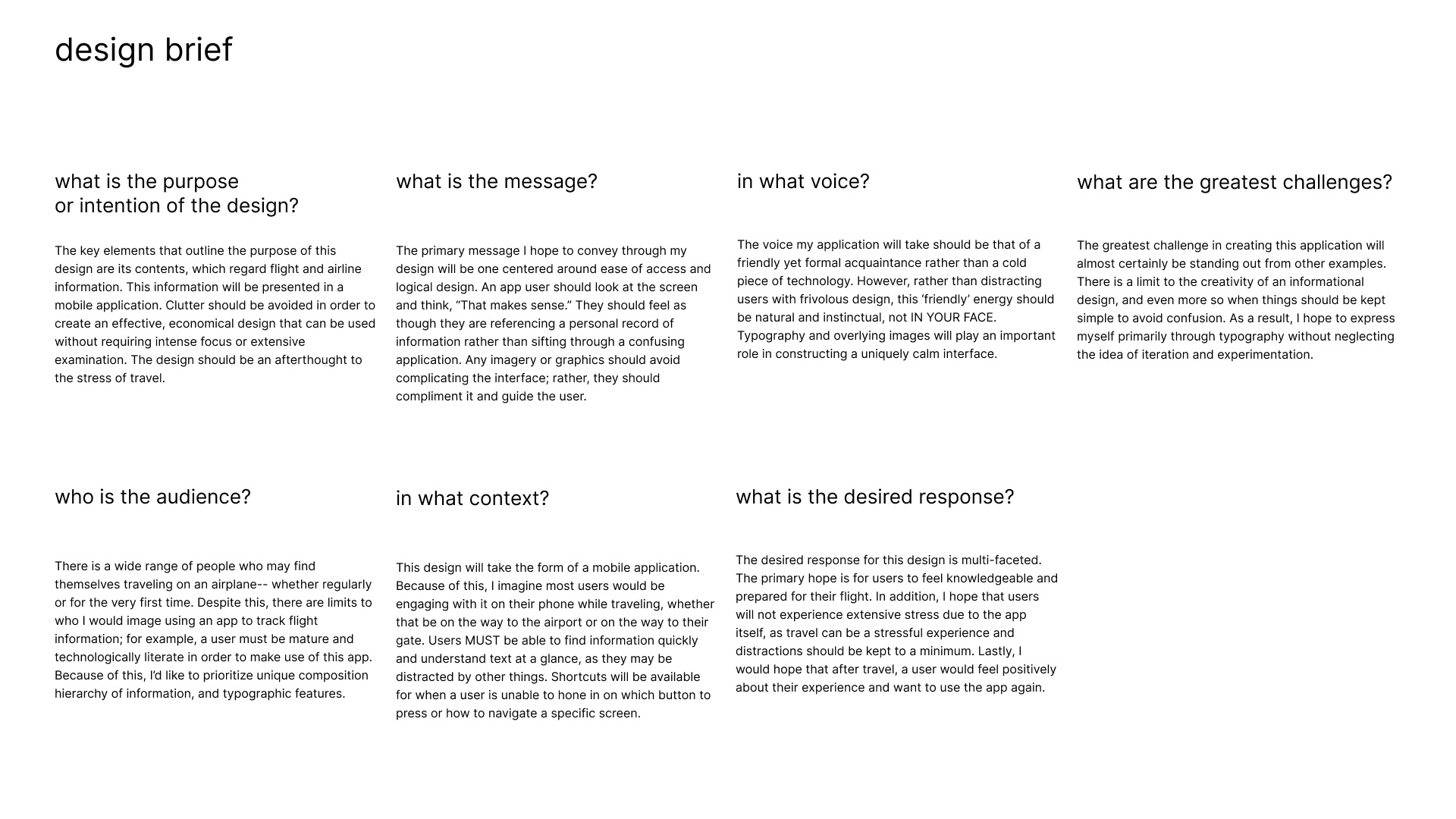
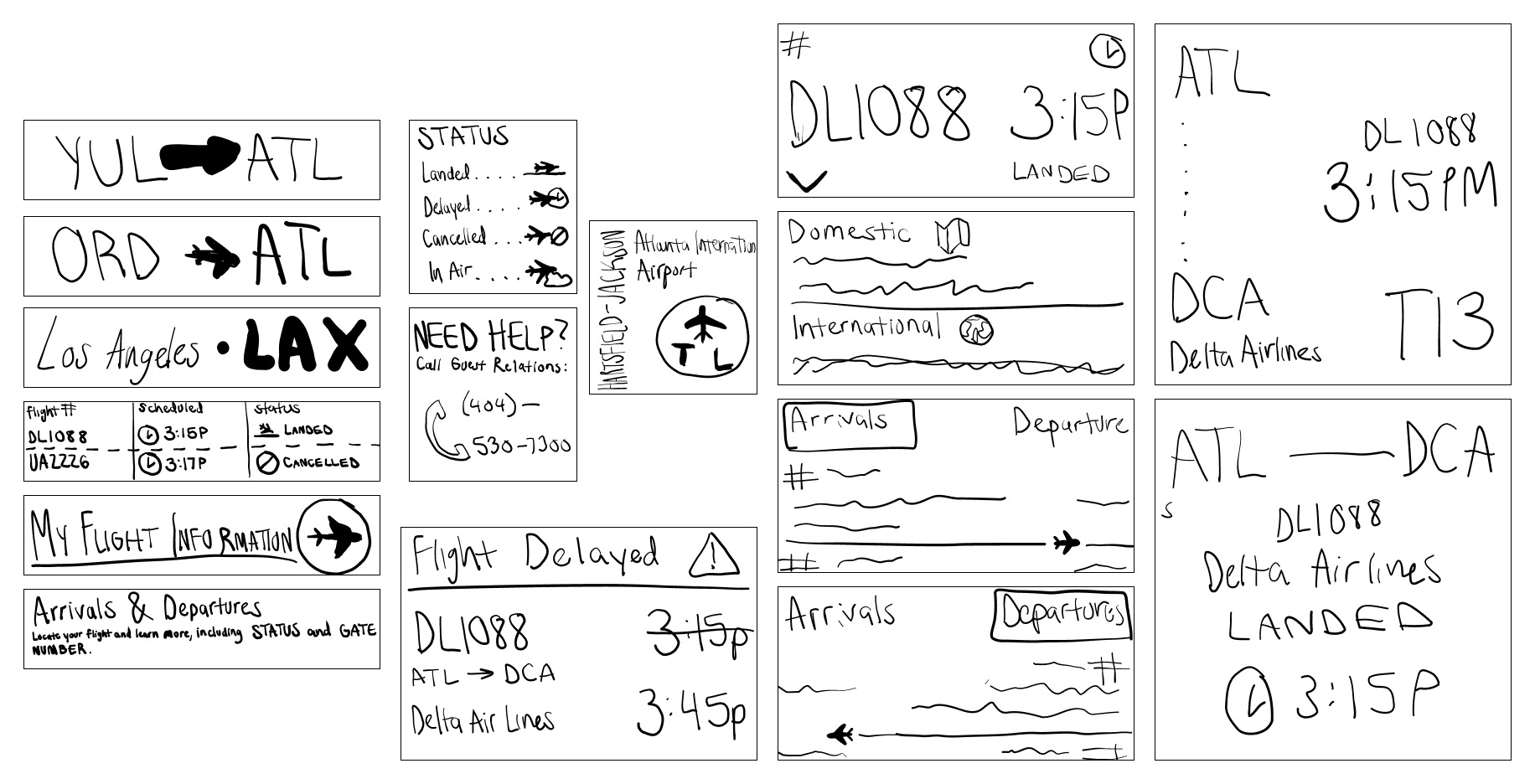
As the project began progressing further into the planning stages, sketching became a deeply necessary asset in terms of creation. The individual sections of the airline interface were outlined through assorted stylized icons and unique typographic compositions. This process began with individual icons dubbed 'atoms' and progressed to complete screen examples called 'organisms'.
In order to further develop the organisms into interfaces, three directions were created with potential layouts, typefaces, and icons included.
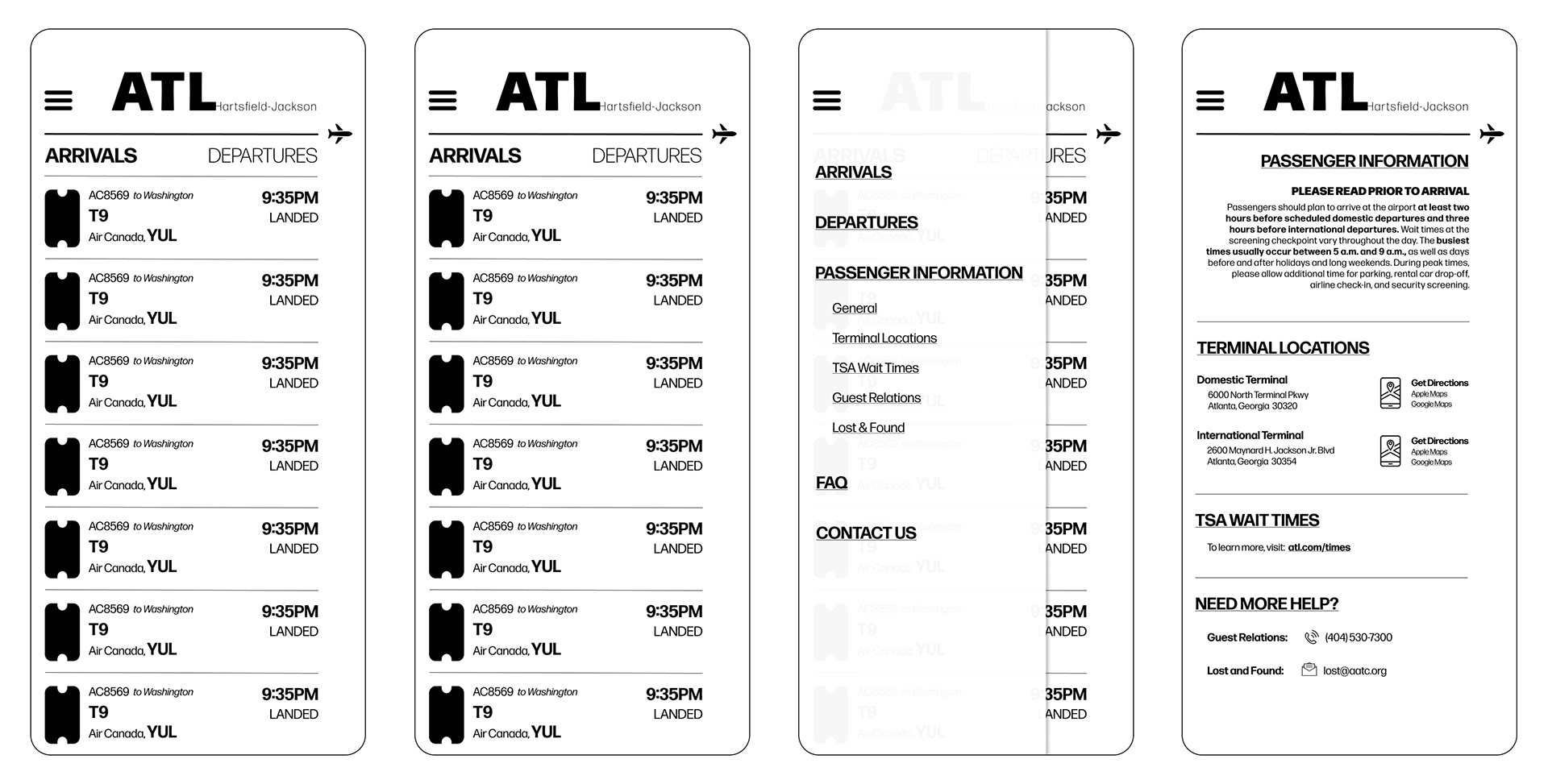
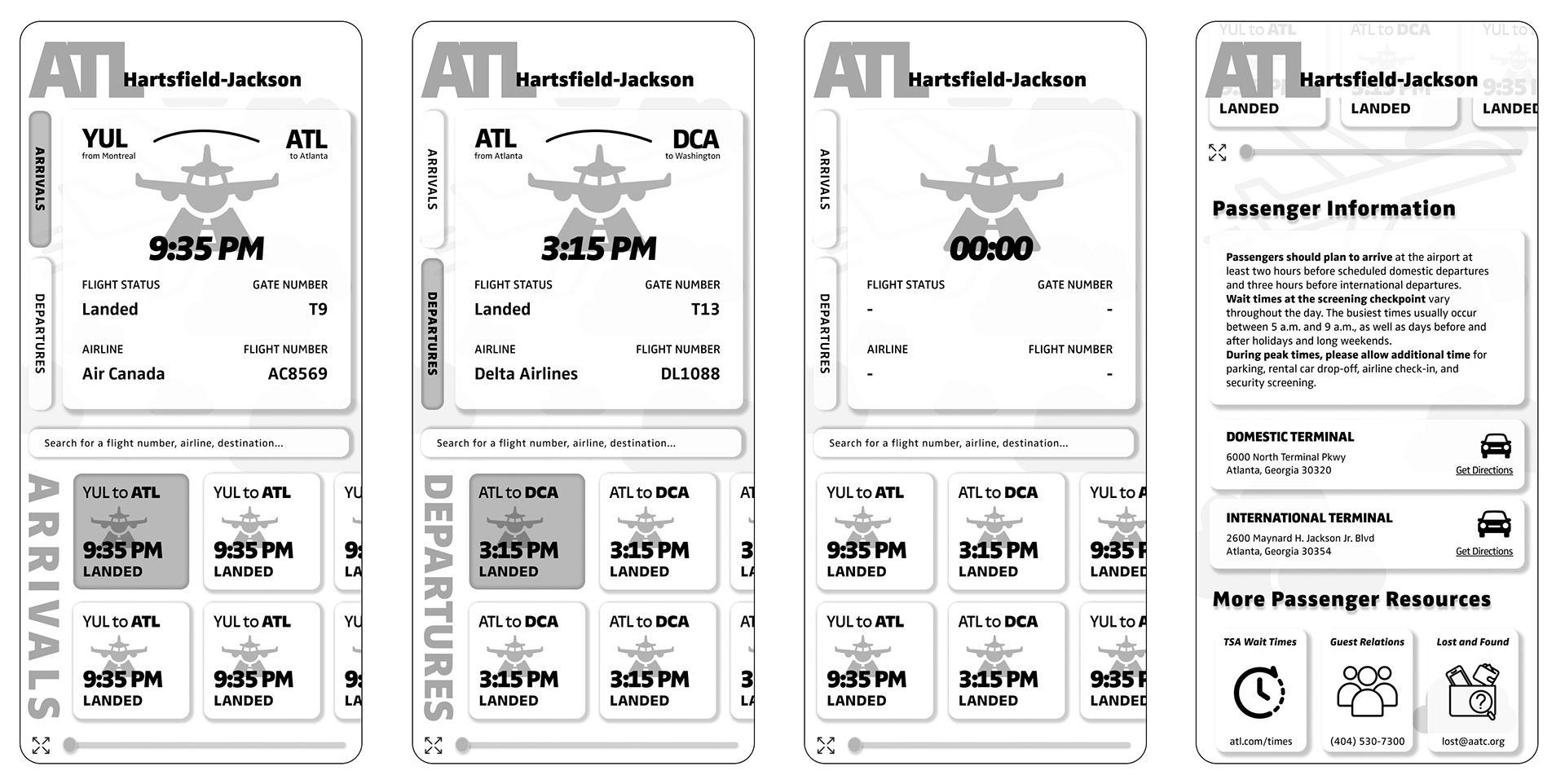
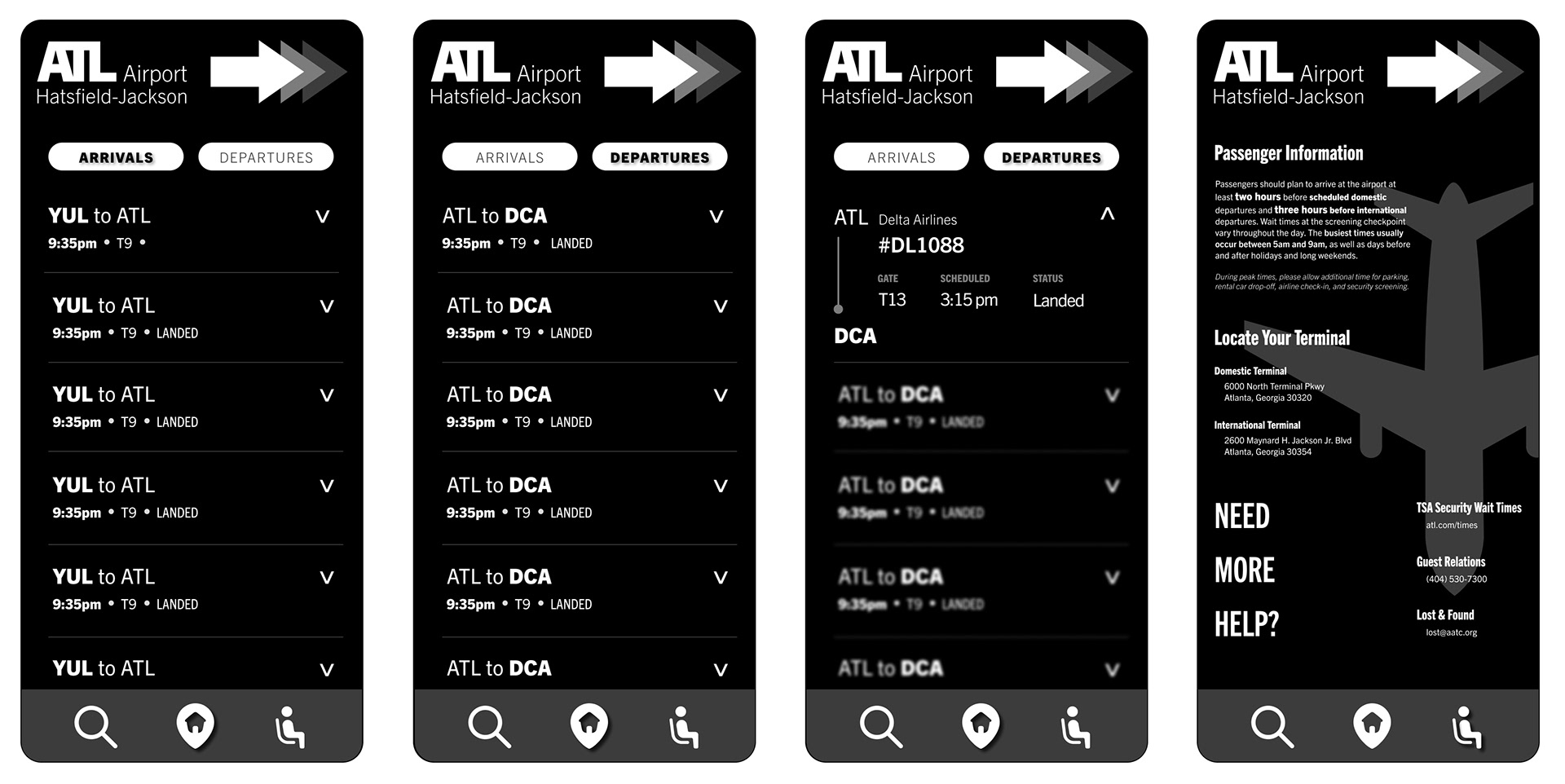
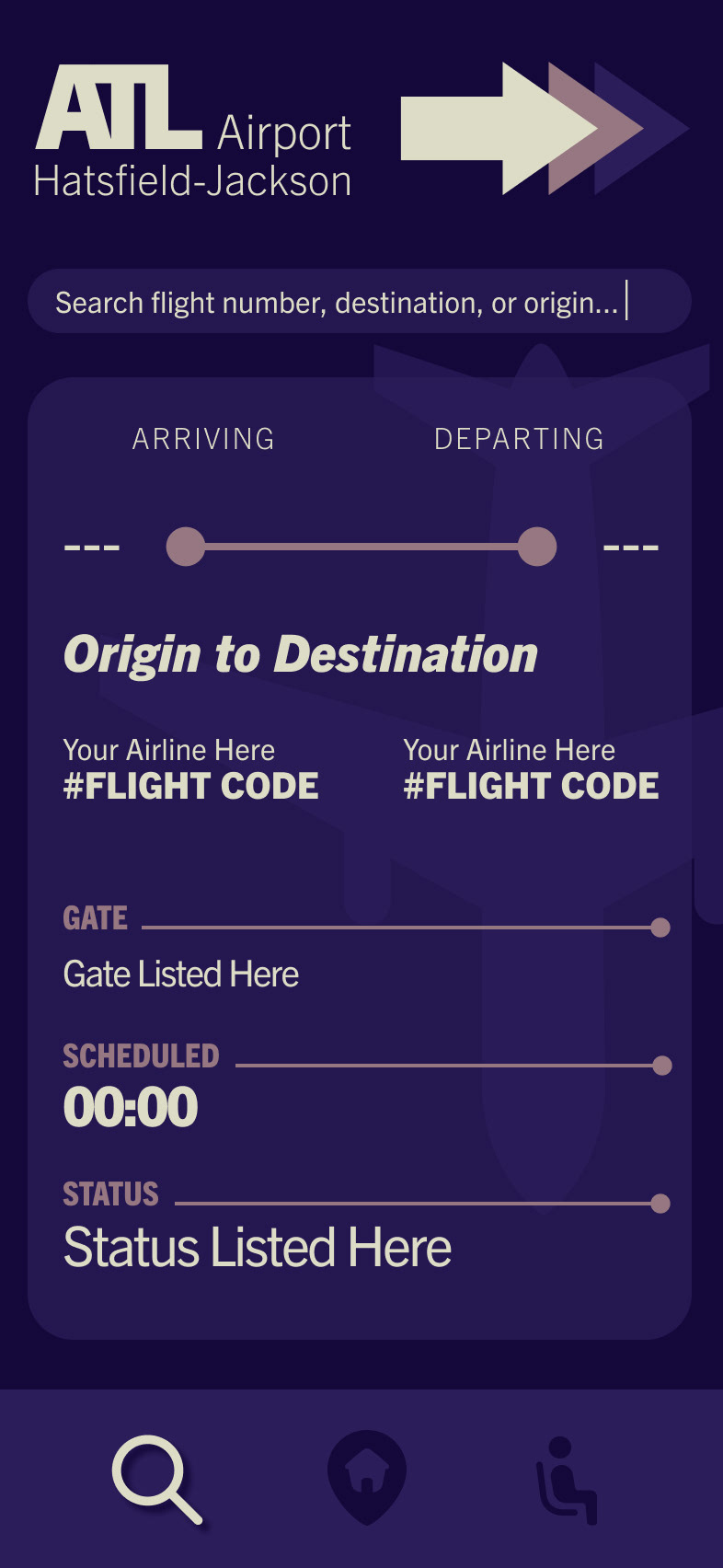
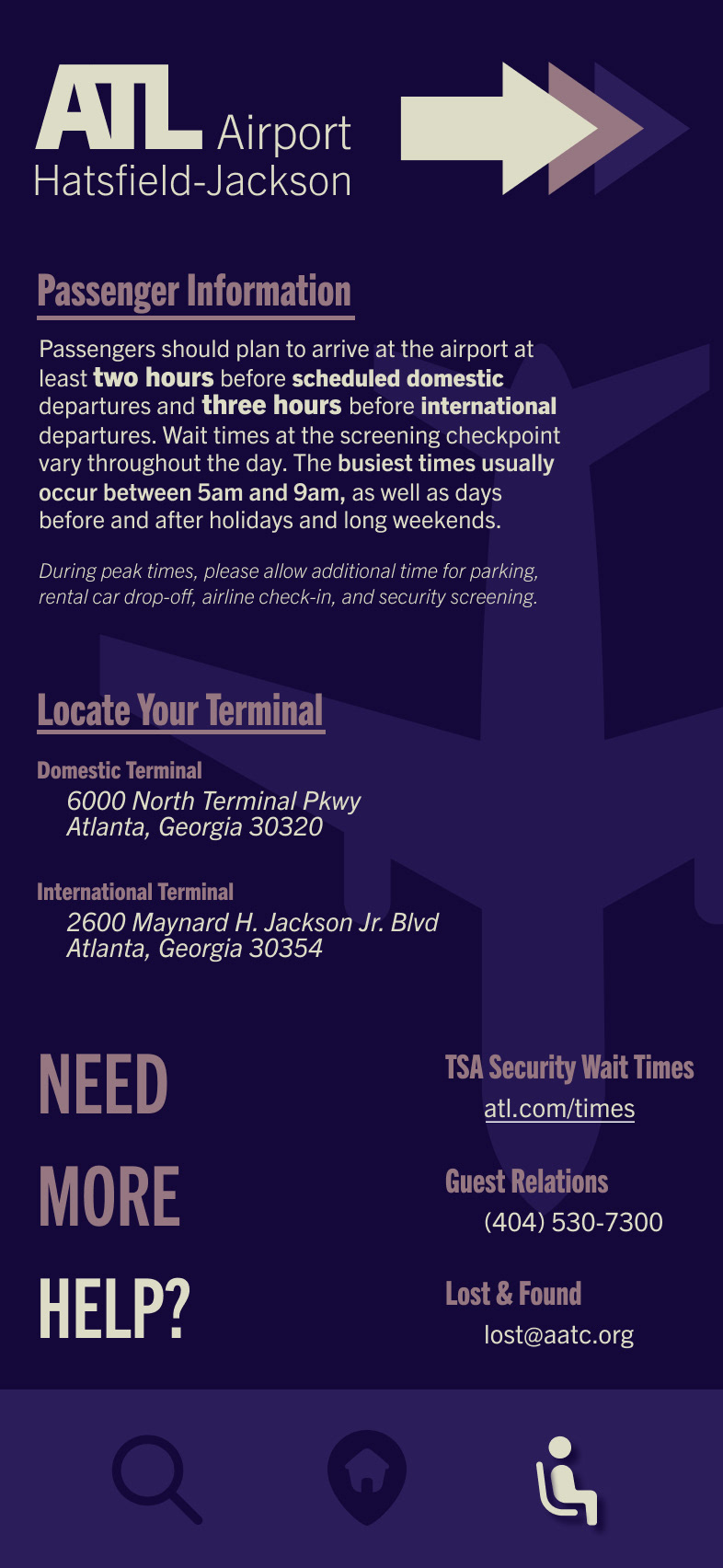
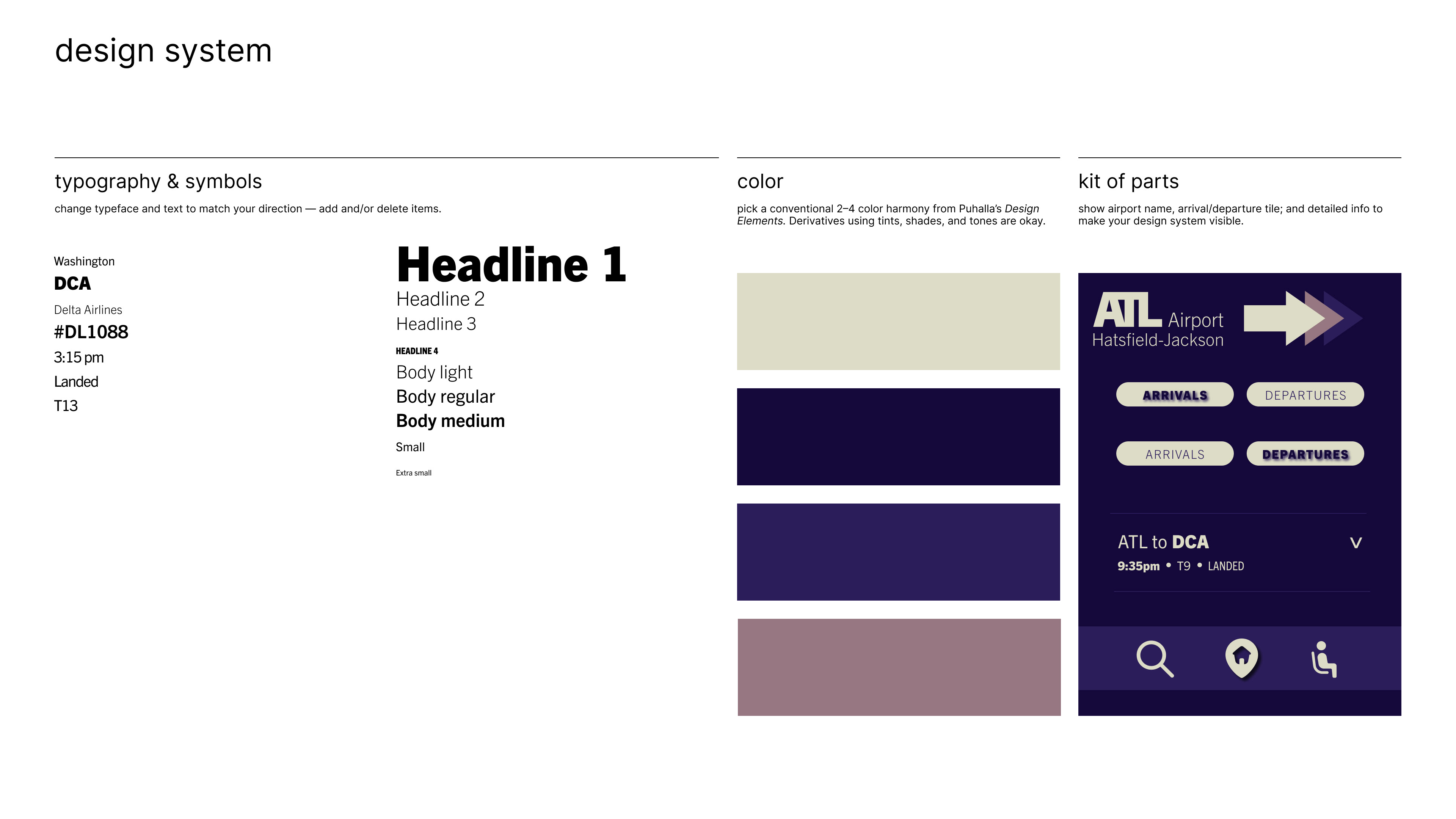
After carefully narrowing the interface selection, one potential option was developed further— this time utilizing a design system. This system establishes a typographic family, conventional color harmony, and 'kit of parts' for consistent use within each interface. The combination of these three parts of the design system further individualizes the airline interface composition and its components.
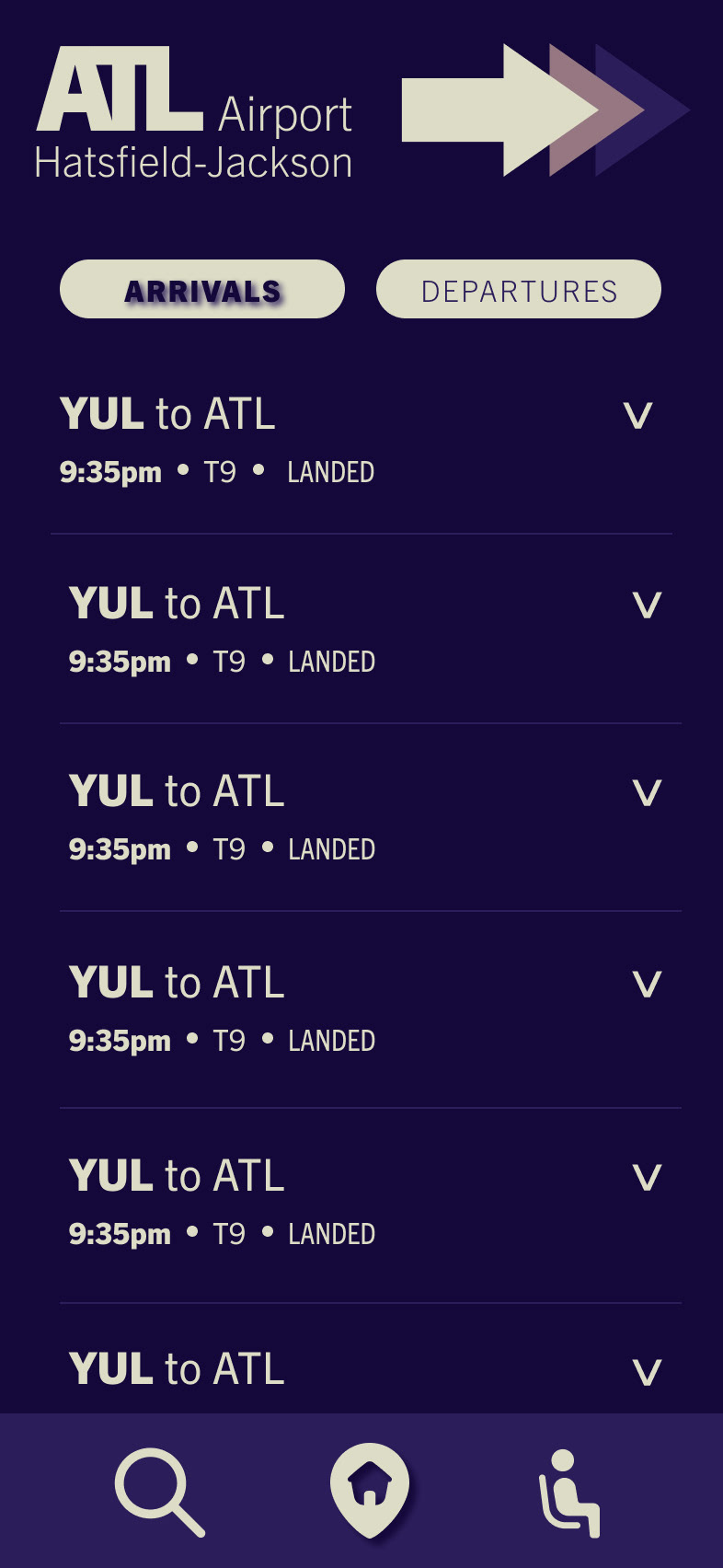
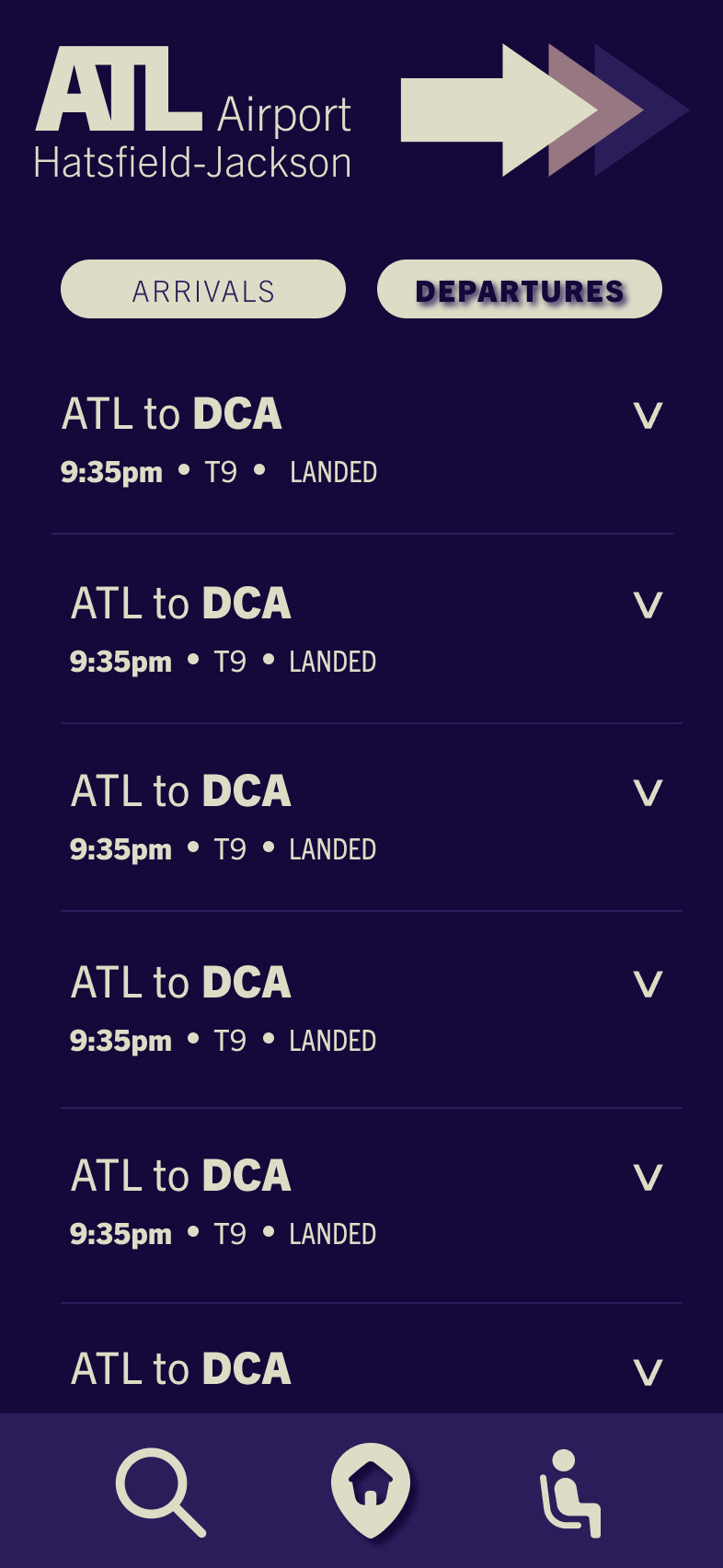
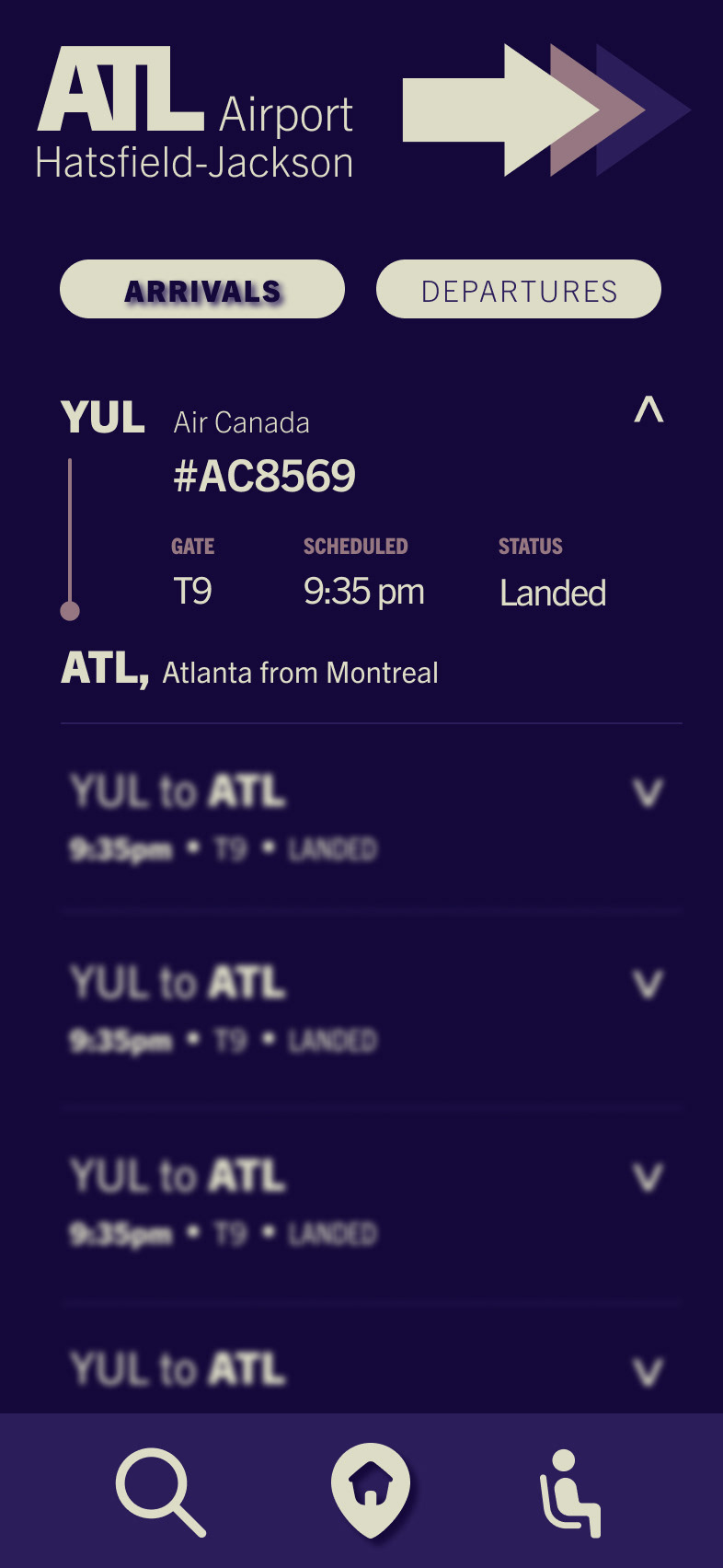
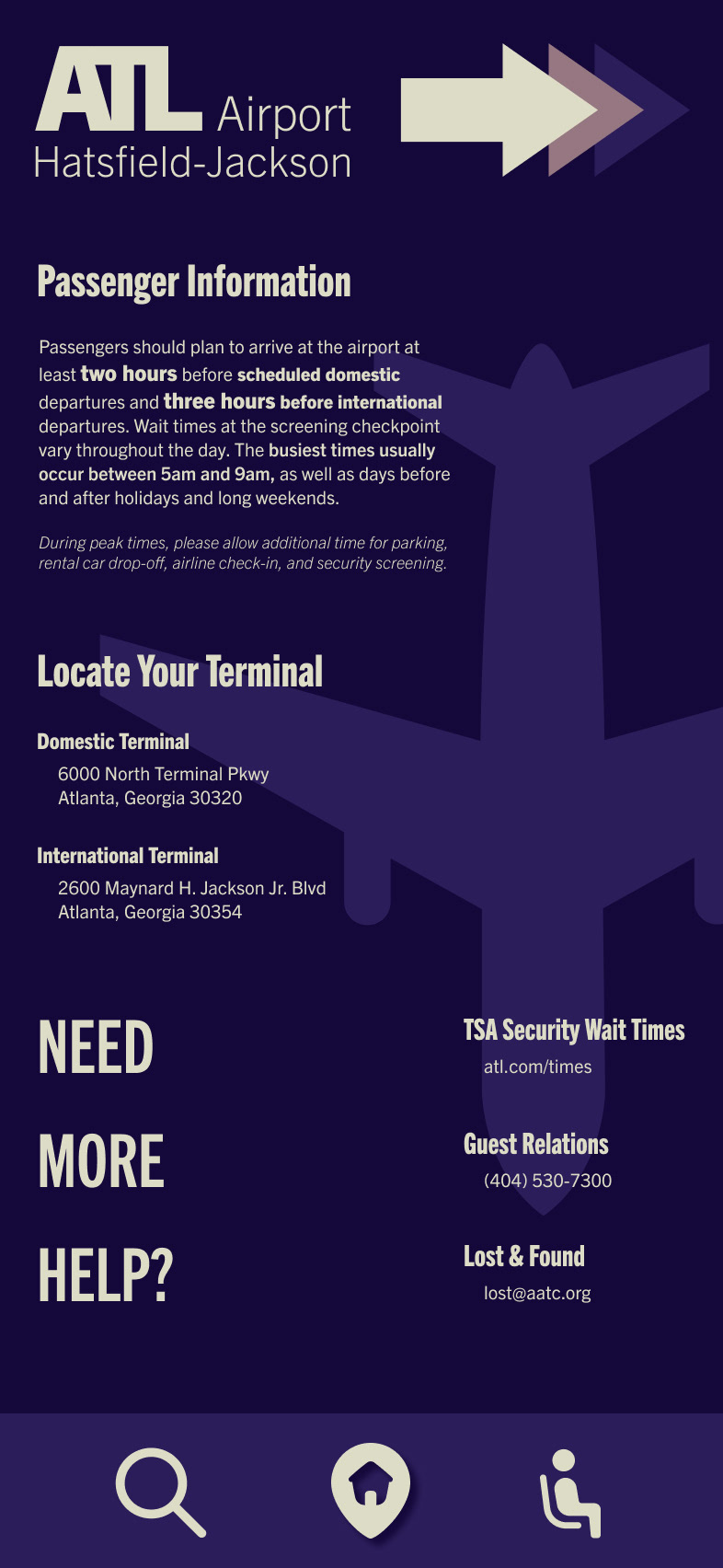
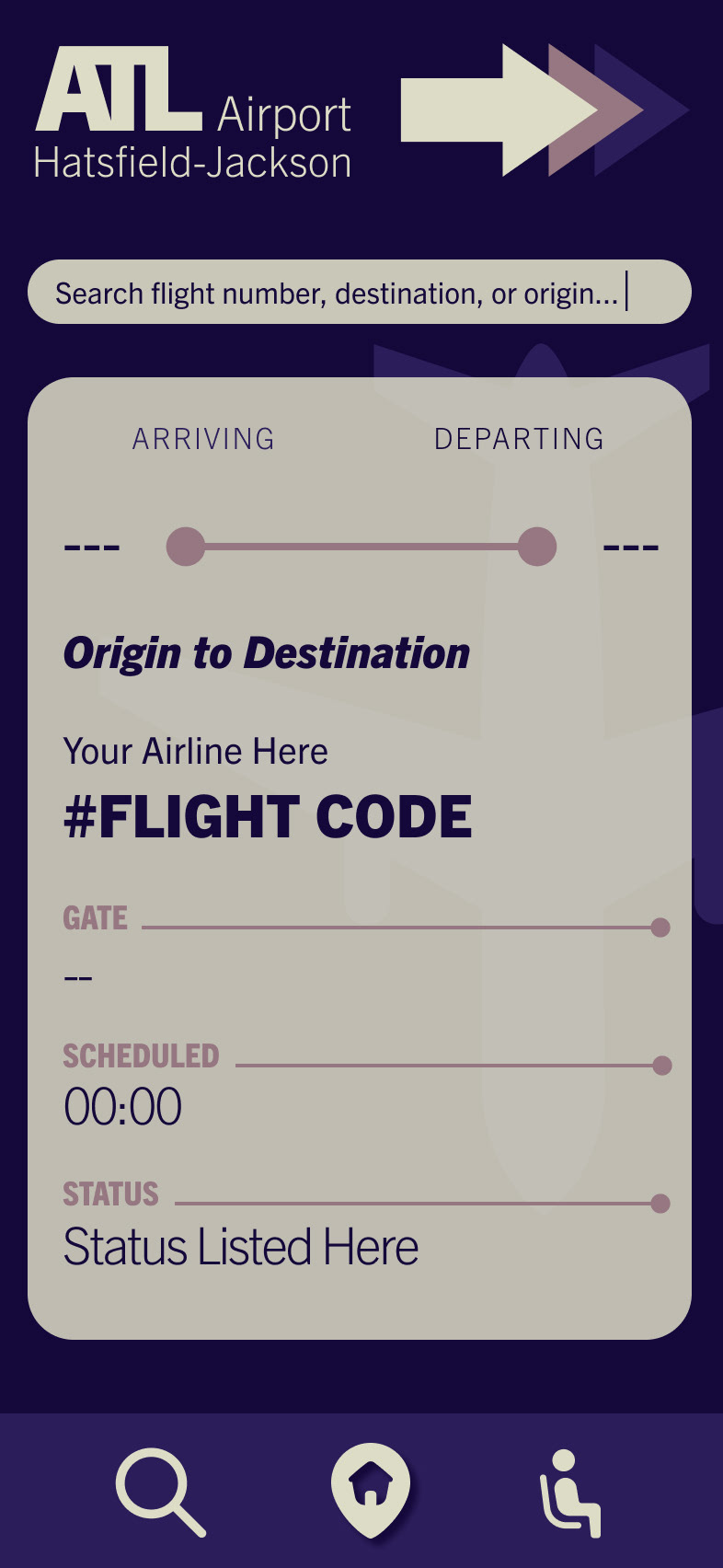
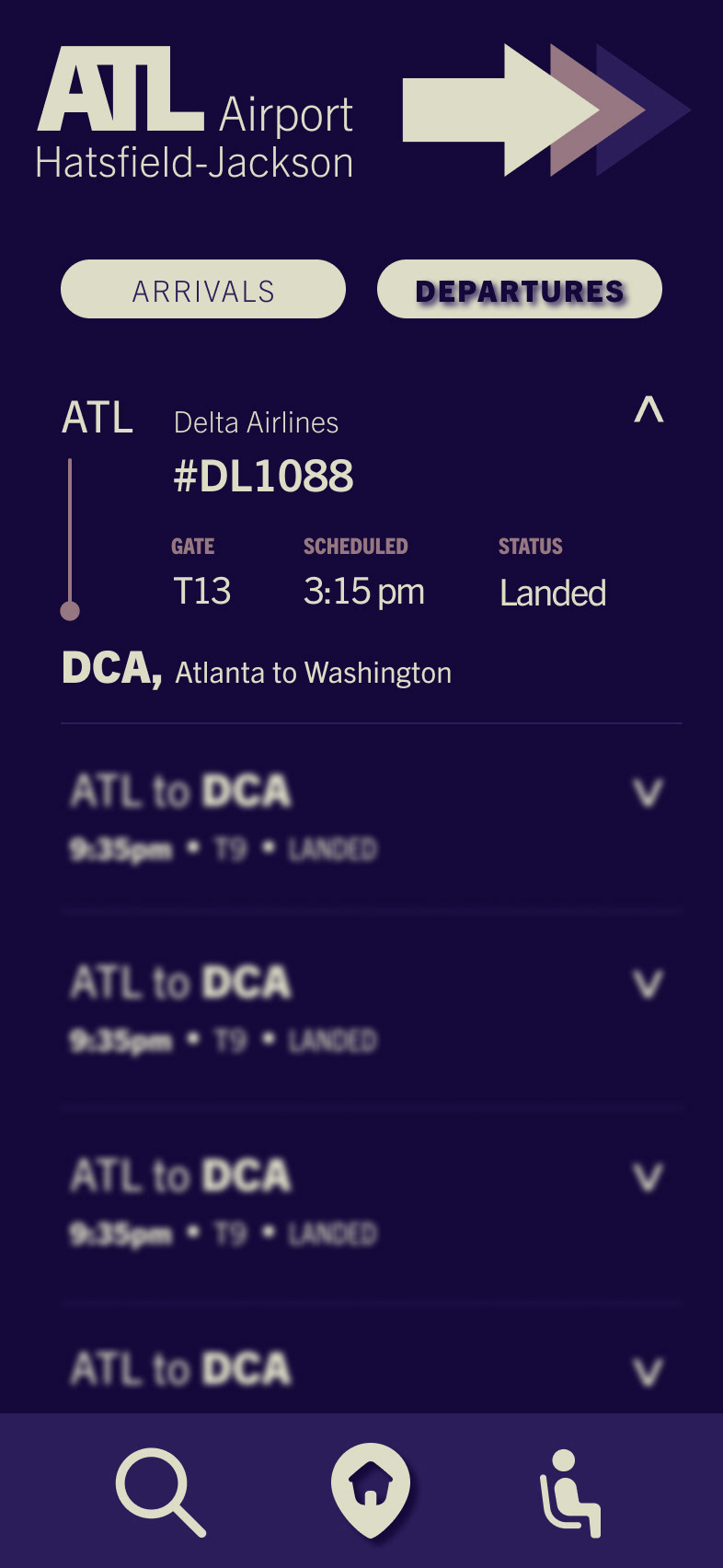
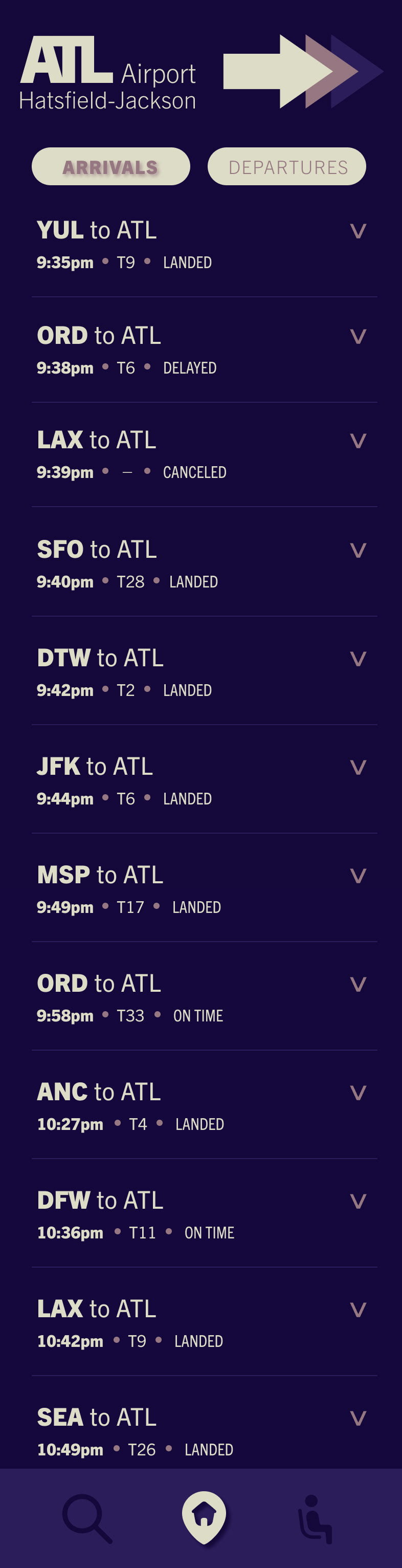
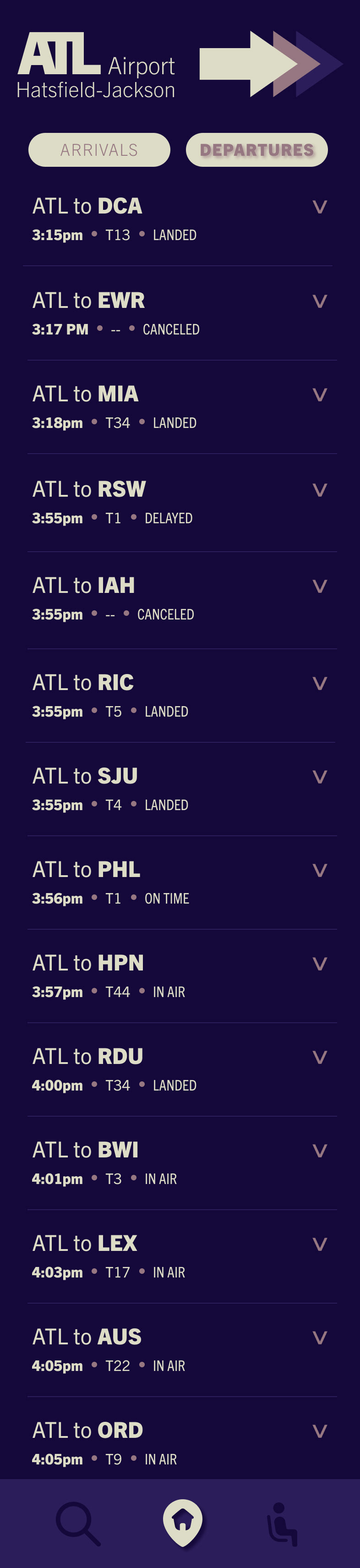
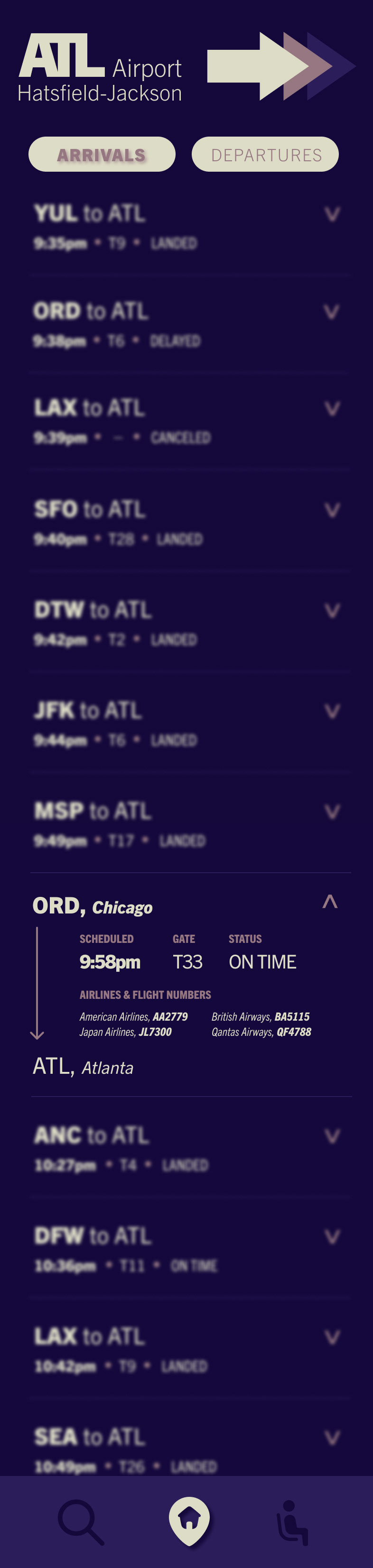
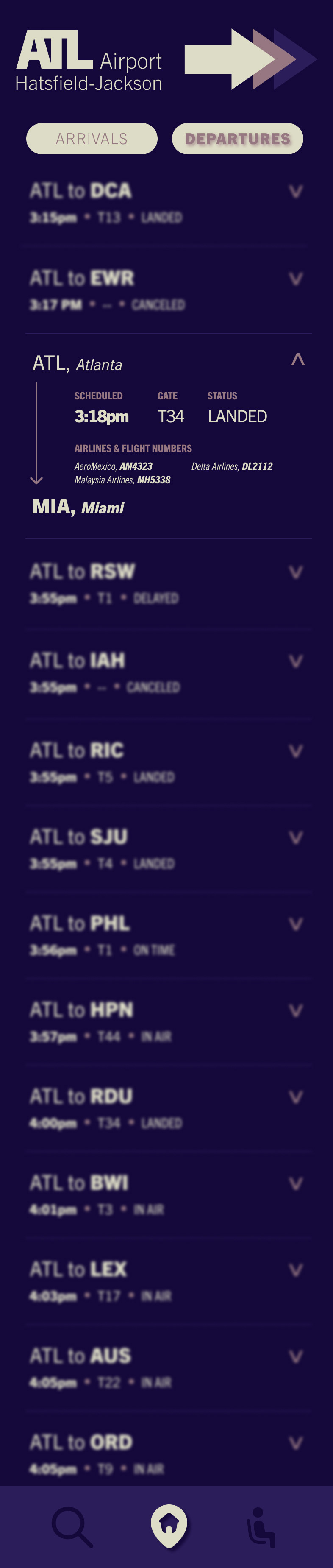
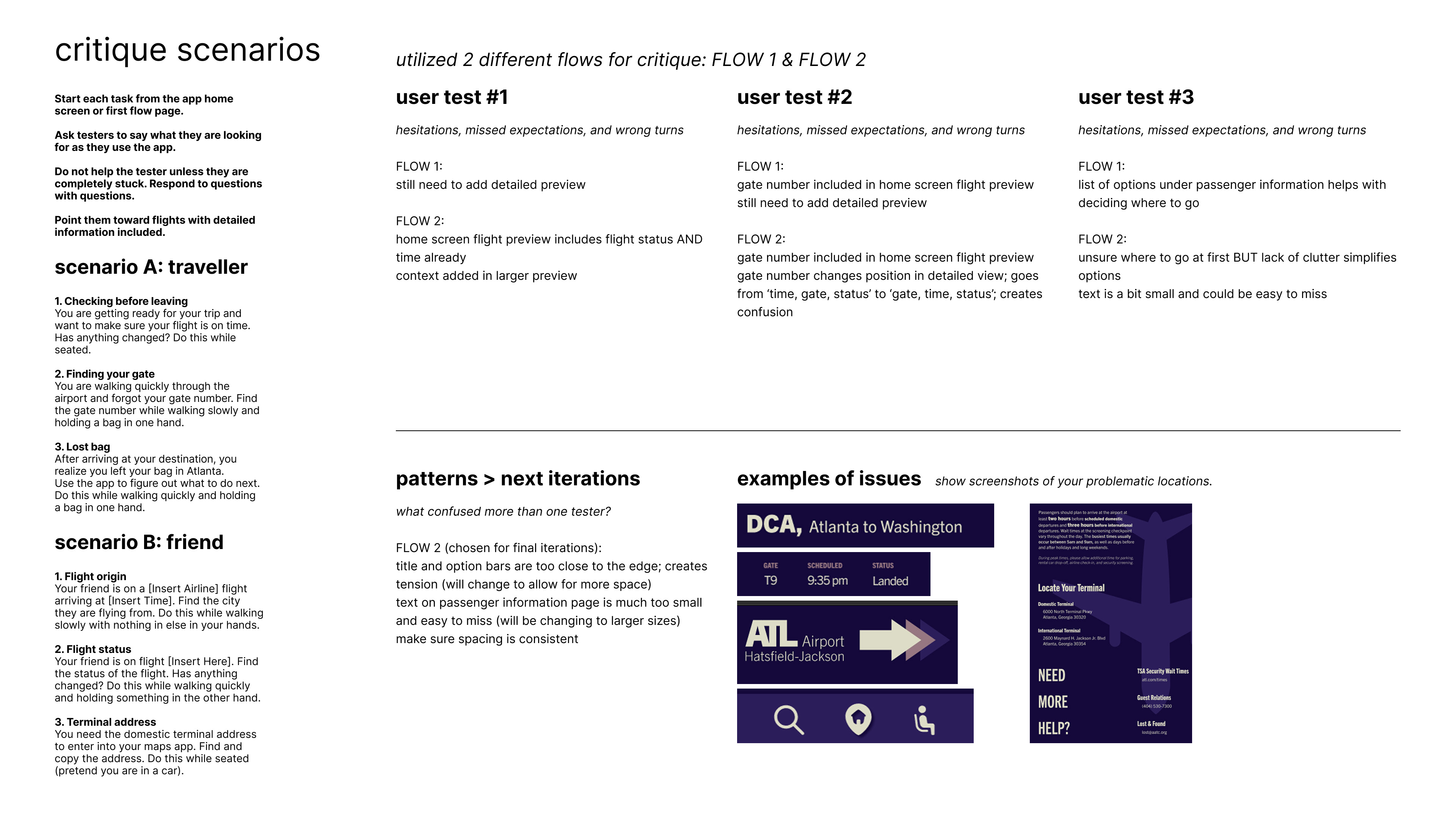
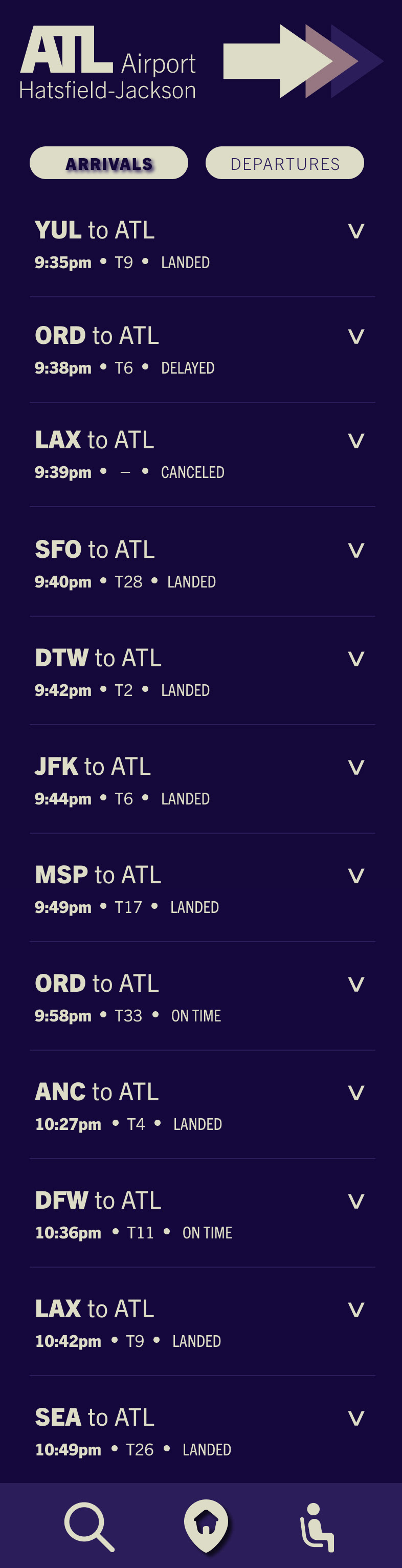
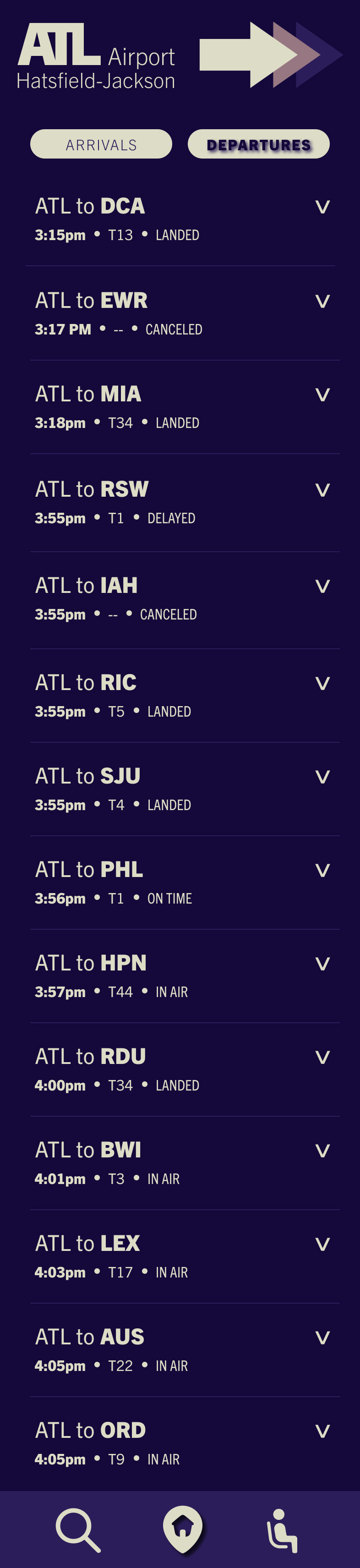
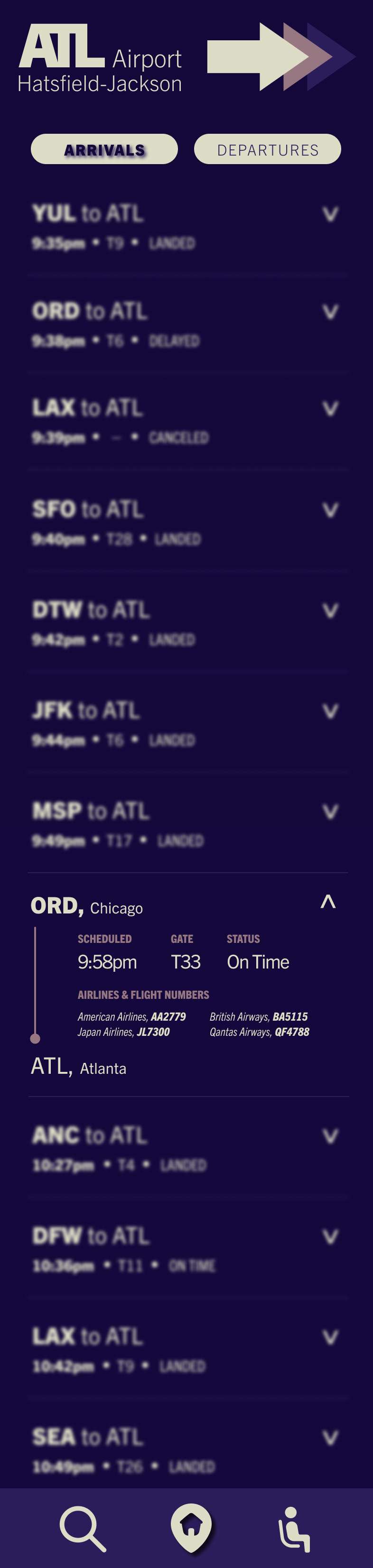
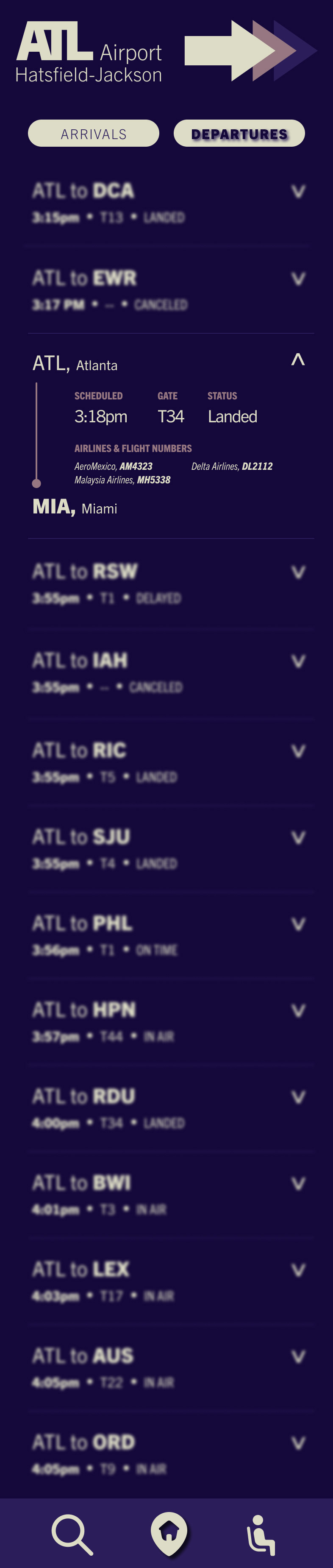
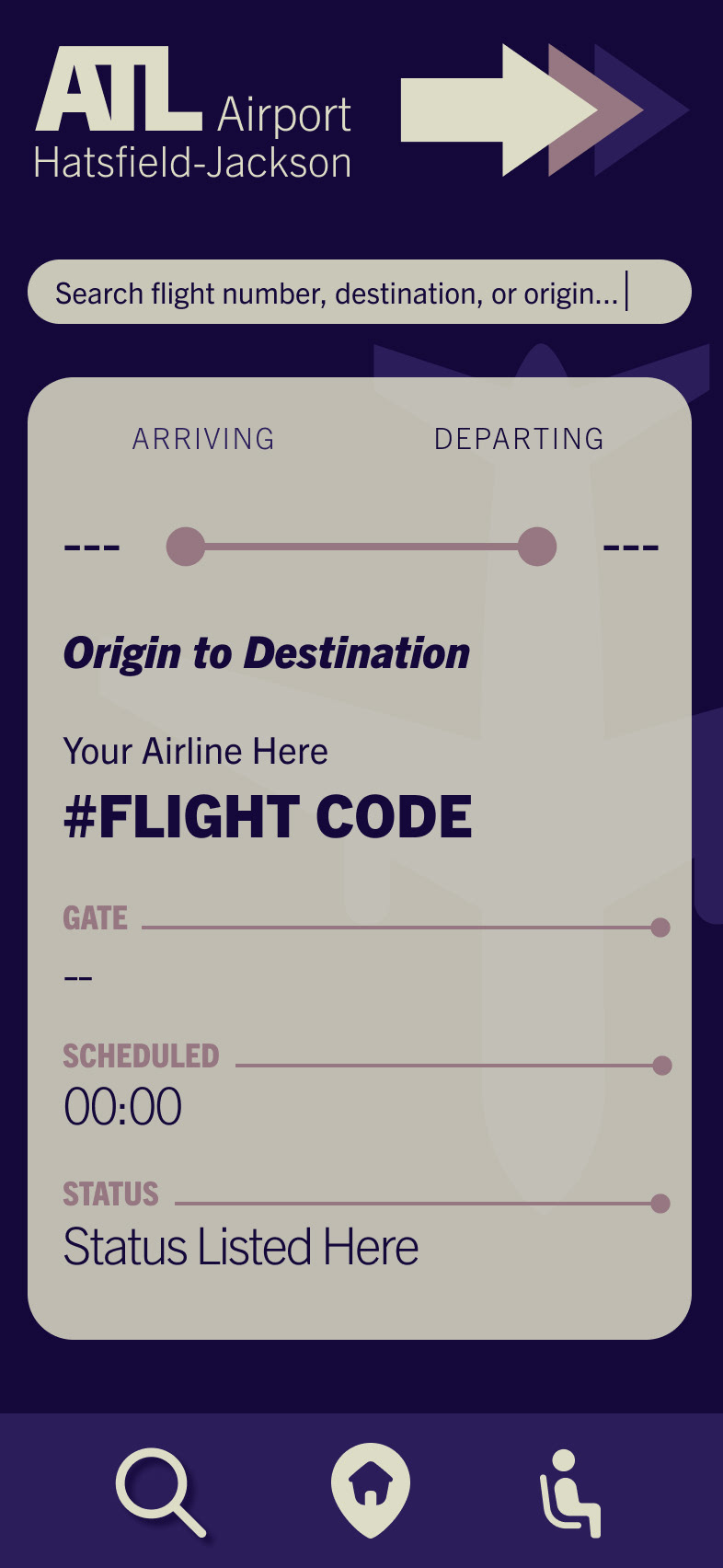
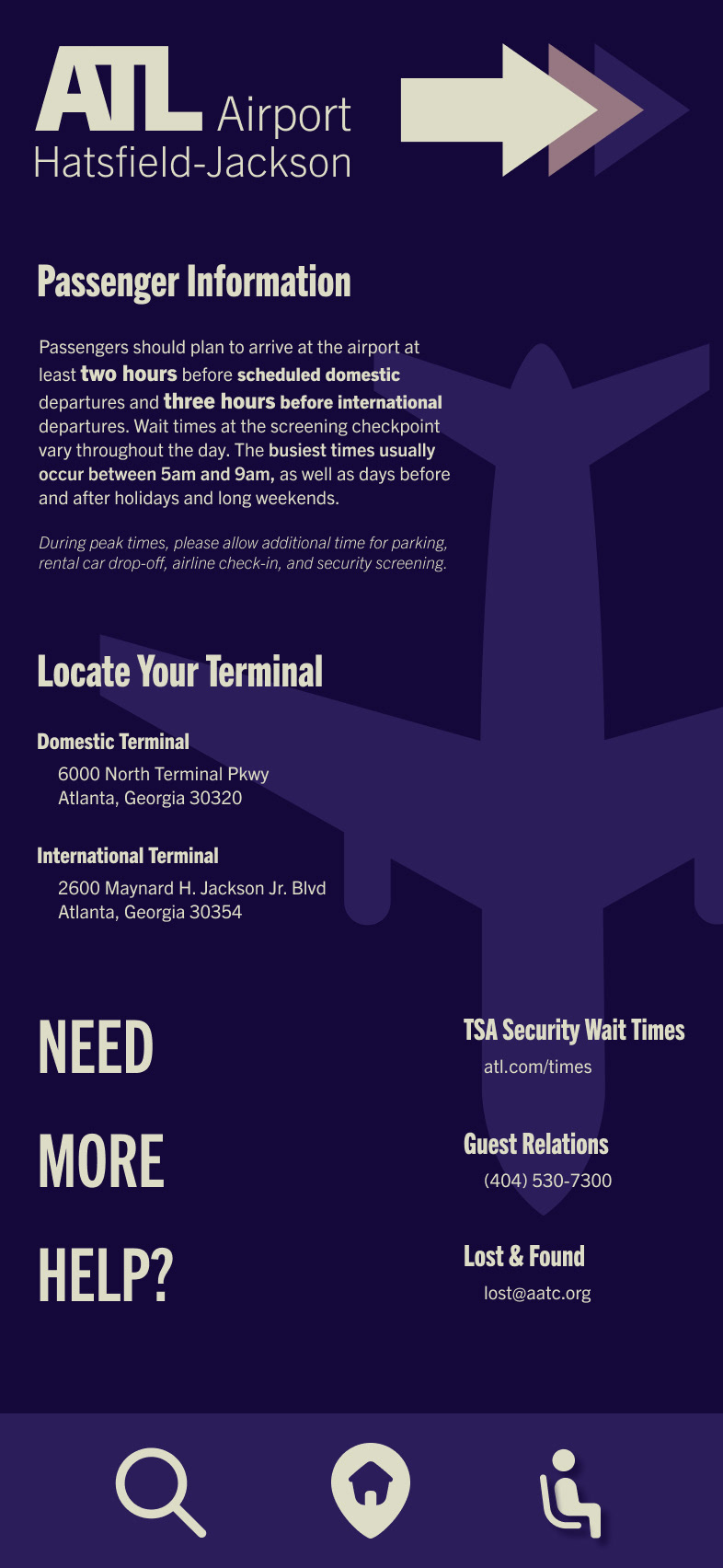
Selections for final directions were further refined after being subjected to a series of accessibility and visibility tests. This critique allowed specific scenarios to be acted out by peers in order to test the interface in a live-action environment. The final direction contains detailed flight information in order to showcase the typographic capabilities of the composition.
FINAL INTERFACE